Check your subfloor vents from the outside before July, when Albury Airport's mean 9am humidity reaches 90 per cent
By Artigellence ·
Walk the outside of the house and look at every vent at the base of the wall: NSW Health says to make sure the weep holes and air vents are uncovered. The Bureau of Meteorology's table puts Albury Airport's mean 9am relative humidity at 90 per cent in July against 53 per cent in January, so the damp season is the one to check for. The vents and clearance page and the subfloor rules check cover the rest.
Call (02) 9072 0403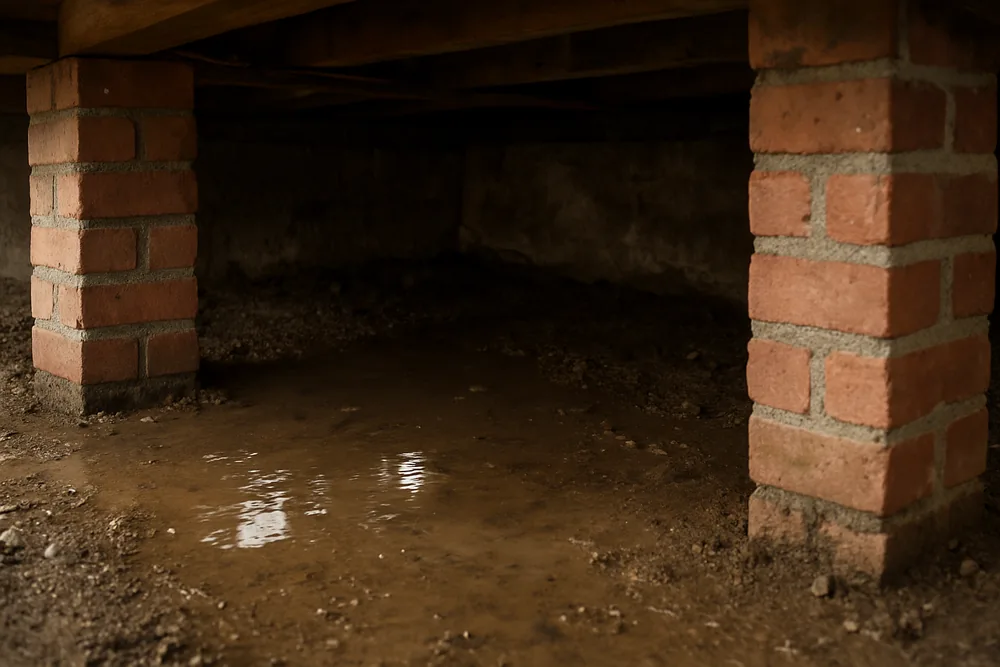
Why July
The Bureau of Meteorology's table for Albury Airport gives a mean 9am relative humidity of 90 per cent in July and 53 per cent in January (readings 1993 to 2010, read 7 October 2026). The code's own explanation says its climatic zones were worked out from relative humidity in January and July and that the season with the highest humidity is used, generally July for southern Australia.
That is one airport's record and it does not say what is under any house. It is a reason to look in the damp season, not a measurement of your floor.
What to look at from outside
- Air bricks and grilles: Find each one at the base of the wall. NSW Health says to ensure the weep holes and air vents at the base of your home are uncovered.
- Soil and garden beds: See whether soil, mulch or a garden bed has been piled against a vent. That covers it, which is our reading of NSW Health's line; no page we read says more.
- Spacing and corners: Look for vents spread along the walls and near the corners. The code says openings should be evenly spaced as far as practicable and placed not more than 600 mm in from corners.
- Inside the space: If there is an access hatch and it is safe to look, the code says a subfloor space must be cleared of all building debris and vegetation and contain no dead air spaces.
- The ground: Note whether the ground is damp or has had water on it. Where it is excessively damp or subject to frequent flooding, the code adds a requirement, with options that include more ventilation or a sealed ground.
What this does not tell you
None of these pages says how many vents a house needs, what climatic zone Albury or Wodonga is in, or whether a house has a problem. For Wodonga, the Better Health Channel says the way to control indoor mould is to control the source of moisture. Read each body's current page before you rely on anything here: the figures were read on 7 October 2026.
Artigellence is the marketing business that operates this site and writes its articles. It does not carry out the work described.
Subfloor vents and ground clearance, and what the code asks for
Thanks — we have your enquiry. Someone will be in touch shortly. Prefer to talk now? Call (02) 9072 0403.
Last reviewed · Updated · First published